
Beneath The Freeze
On life in boxes, quiet moments, and the thaw that comes unseen

“No winter lasts forever; no spring skips its turn.”
~ Hal Borland
Welcome to Sage Haven. Here you’ll find a quiet space to slow down, reflect, and feel at home with the turning seasons. As a paid subscriber, you’ll enjoy full access to my 60-page Seasonal Wellness Ebook, plus the archive of heartfelt letters and my 30-day collection of gentle self-care prompts, each designed to help you pause, notice, and nurture yourself.
Settle in and enjoy 💜
There are seasons in life that can feel embarrassingly small.
Not the kind we post about.
Not the kind that arrive with announcements or momentum.
Just the low-to-the-ground seasons, where life contracts instead of expands, and your world becomes measured in what you can carry, what you can manage, what you can survive.
Mid winter is one of those seasons.
Nothing is blooming yet. The trees look bare. The fields appear lifeless, the ground hard and unreceptive. From the outside, it can look like nothing is happening at all. And yet, beneath the surface, the most important work is underway. The freeze is preserving. The soil is resting. Energy is being conserved for what comes next.
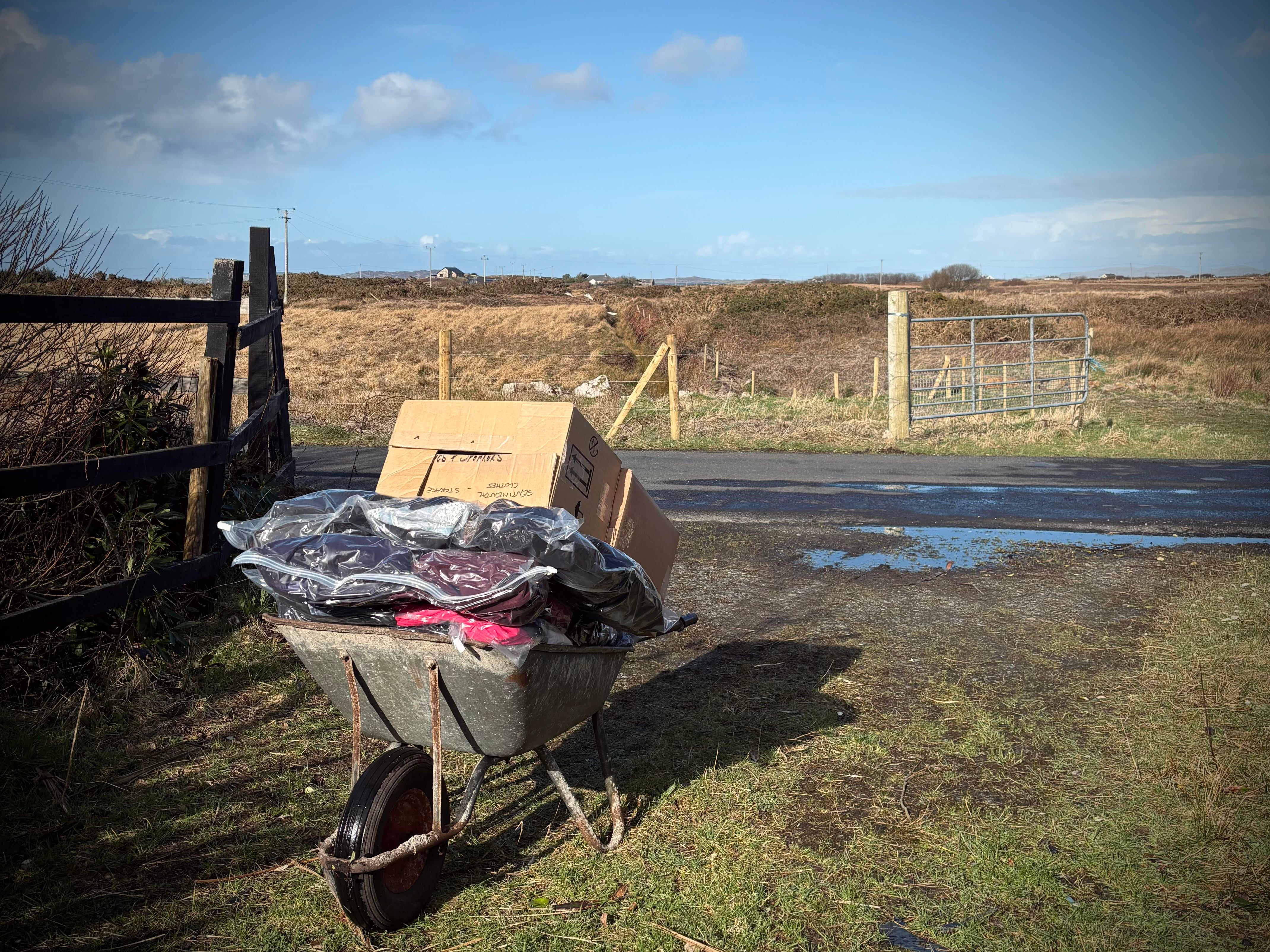
Our temporary home currently mirrors the season outside. It is a landscape of boxes stashed under the stairs, bags tucked into corners, and Christmas gifts waiting patiently for a home that doesn’t exist yet. Our clothes live in two plastic boxes each, no hanging space, no overflowing drawers, no unnecessary accessories. Every day begins and ends with inflating and deflating beds, a rhythm we detest and appreciate in equal measure.
Even in this small space, we carve out routines that give each other room to breathe. Time and space become deliberate acts of care: one of us sitting quietly with a cup of tea while the other watches Netflix with headphones, two finding chores to do in town while the other stays home in silence. It’s not glamorous. It is not tidy. But it is enough to hold us while we sit in this pause, learning how to recalibrate, learning how to live with each other before living in the space we will call home.
Leaving a long-term relationship is never just about leaving the relationship itself.
It is a division of assets and friends.
Of time.
Of children’s calendars and shared histories.
Of the dog who does not understand why their pack is no longer united.
There are the visible logistics, the parts that can be explained, and then there is the internal unravelling no one witnesses. People rarely see what goes on inside a relationship. Even when the signs are there, we are taught to look away, to preserve the illusion of harmony, to say it’s none of our business.
When you are the one who leaves, there is often a quiet guilt that follows you. Not because you have done something wrong, but because leaving is the only visible outcome. From the outside, it can look like rupture without causation. The person left behind automatically gathers the sympathy. Sometimes they also demand it. The story becomes simple for those watching: someone stayed, someone went.
I have been slow to tell people. Not because I am ashamed, but because I know I am not yet ready to defend my decision. I am not ready to correct them when they say, Maybe you’ll work it out, or You were so good together. I am not willing, at least not yet, to explain the interior landscape of a relationship that no longer exists.
Nor am I willing to tarnish his name to make my leaving more understandable for others.
That choice comes with its own weight. Silence can look like protection. Sometimes it is. Sometimes it is simply the only way to hold complexity without collapsing it into blame.
Winter, too, is often misunderstood.
In nature, winter is not a failure of growth. It is a deliberate pause. A season of containment. Plants pull their energy inward. Trees shed what they cannot carry. The soil rests, not because it is finished, but because constant production would exhaust it.
This is the work I am learning to do now.
There is a delicate balance when children are involved, between being honest about why we now live apart and refusing to stand between them and their relationship with their other parent simply because ours did not survive. Two truths can exist at once. A relationship can be harmful, and still contain love. Leaving can be necessary, and still extremely difficult.
Mid winter holds contradictions like this easily. It does not rush resolution. It allows rest and growth to coexist, frozen together for a while, until there is enough warmth to separate them safely.
Looking back over the last two years, I can see how I was preparing for the moment I left without realising it. Small acts of gathering. Quiet strengthening. Boundaries tested internally long before they were spoken aloud. Something inside me knew what my mind was not yet ready to name.
In nature, this kind of knowing happens underground.
Seeds do not wait because they are hesitant. They wait because timing matters. Germination begins only when the conditions are right, not when the world demands proof of progress.
My body, it seems, was keeping its own calendar.
It has only just caught up with the decision my mind finally made. Lately it has been loud, insistent, shouting from multiple sources at once. Fatigue, pain, unnamed symptoms, all arriving after the endurance has ended.
This, too, is winter’s work.
When the thaw begins, everything aches. The ground softens and cracks. What was held rigid for survival finally loosens, and the release is not gentle, it is muddy and messy.
The body processes what the mind could not afford to feel at the time.
Mid winter does not look brave.
It looks tired.
It looks quiet.
It looks like stopping long enough for the truth to reach your bones.
From the outside, this season may look like regression. Like a life paused. Like a step backward. But seasons are not measured by appearances; they are measured by function.
And the function of mid winter is not arrival.
It is recovery.
It is recalibration.
It is learning how to belong to yourself again before you ask anything else to take root.
If you find yourself in a season that looks small, unfinished, or unremarkable, you are not broken. You may simply be doing the kind of work that happens out of sight.
The soil knows what it’s doing.
And so, I am learning, do we.
Until next time,

You may also enjoy:
If you enjoyed this essay, you might like to download my free ebook Seasonal Wellness, available for all paid subscribers. It’s full of seasonal reflections, practical tips, and delicious recipes.
Each week I take one archived essay out from behind the paywall for you to enjoy for free 💜

Beautiful reflections - we can draw so many parallels between nature and our journey through life 🙏🌿
Powerful writing on holding complexity without collapsing into simple narratives. The part about refusing to tarnish his name really landed for me, there's something brave about protecting nuance when everyone wants a villain. I went thru a similar thing few years back and the hardest part was exactly what you described, people wanting easy explanations when the truth was way messier. The winter metaphor works perfectly here beacuse it doesn't rush the thaw.